
Two Names of a Miao Child: One for the World, One for the Roots
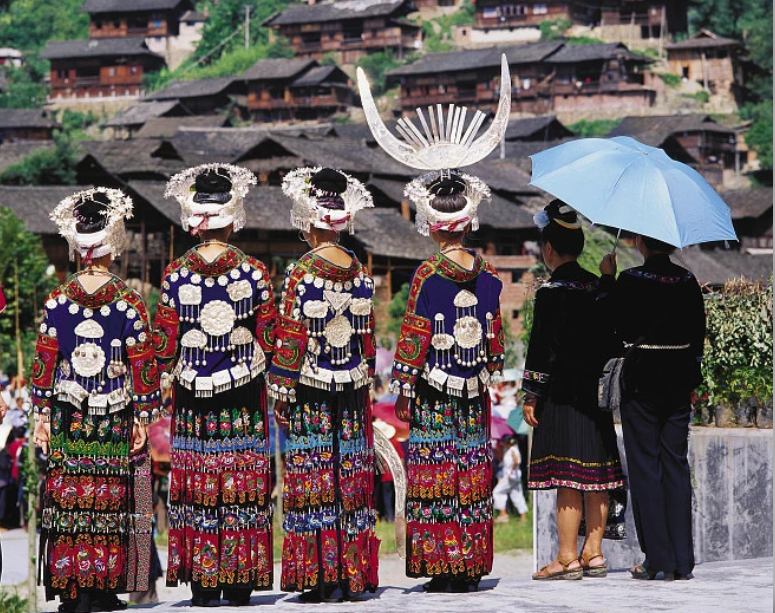
In Miao villages, every child is born with two identities. One is a formal name used for school and society, neatly written on official documents. The other is a Miao name, a nickname spoken by family members—carrying the hidden codes passed down through generations.
The way Miao names are formed is both simple and deeply meaningful. A child’s given name is combined with the first character of the father’s name. These two characters together create a unique Miao name. There are no complicated rules, yet it firmly ties the child to their paternal lineage.
In a Miao name, the first character represents the individual, while the second comes from the father’s name. For example, if a girl’s given name is “Bian” (which means “flower” in the Miao language), and her father’s name begins with “Jiu,” her Miao name becomes “Bian Jiu.” With just one call of her name, everyone knows she belongs to Jiu’s family.
In daily life within the village, people rarely use formal names. Instead, everyone calls each other by their Miao names. If there are children with the same given name—say, two girls named “Bian”—they can easily be distinguished by adding the first character of their fathers’ names. Since each father’s name is unique, confusion is avoided. This is the practical wisdom of the Miao naming system: no written genealogy is needed, because the name itself is proof of one’s lineage.
This “child’s name + father’s initial” system is a unique Miao tradition that has been passed down for centuries. Unlike written family records, the Miao lineage is preserved within names themselves. By tracing names backward, one can follow the family line: my name carries my father’s mark, his name carries my grandfather’s, and so on. Linked together, these names form a clear and unbroken chain of ancestry—from distant forefathers to today’s children.
As we grow up, we leave the mountains with our formal names, using them to study, work, and engage with the wider world. These names help us find our place in society. But whenever we return to the village and hear our Miao names called, all the weariness fades away. Within those two syllables are the warmth of the hearth, the scent of terraced fields, the love of elders, and the roots etched deep within our souls.
Every Miao child has two names: one that helps us go further, and one that reminds us where we come from. In those two characters of the Miao name, the first is the self, and the second is heritage—a simple yet profound expression of love and connection, passed down through generations.