
In the lush mountains and rivers of Qiandongnan, a thousand-year-old romance of the Miao people quietly endures — batik. This traditional craft, listed among the first batch of China’s National Intangible Cultural Heritage, begins with planting indigo and collecting wax, raising silkworms and weaving cloth. Every inch of fabric and every pattern is created by the hands of Miao women. In the end, these fabrics become garments worn on the body, paired with exquisite Miao silver jewelry, carrying memories of migration, gifts from nature, and the craftsmanship passed down through generations.
When you step into a Miao village in Qiandongnan, you will find that batik is never a mass-produced craft. Instead, it is a complete life cycle that begins with the land and ends as clothing. In spring, indigo is planted; in summer, silkworms are raised; in autumn, indigo dye is prepared; and in winter, wax patterns are drawn. Following the rhythm of the seasons, the Miao people transform the essence of plants and earth into the deep indigo hues and symbolic patterns unique to their culture. Paired with Miao silver jewelry, these garments embody a distinctive ethnic elegance.
Creating batik clothing begins with the most basic element — the fabric. From a young age, Miao girls learn from their elders how to raise silkworms and spin thread. In spring, mulberry leaves are picked to feed the silkworms. Once the cocoons are formed, silk is reeled and twisted into yarn. Using traditional wooden looms, the yarn is woven shuttle by shuttle into sturdy homespun cotton cloth.
The newly woven white cloth must then be soaked in plant-ash water and repeatedly pounded and washed to remove natural oils and impurities from the fibers. It is then sized with konjac starch and polished with tools such as cow jawbones or smooth pebbles, scraping and pressing until the surface becomes smooth and firm. This process ensures that the fabric can firmly hold the wax and absorb dye evenly during later dyeing stages. There is no shortcut in this step — only patience and skill. Each piece of homespun cloth carries the warmth of handmade work, just like every piece of Miao silver jewelry holds the warmth of a craftsman’s fingertips.
Next comes the planting of indigo and the preparation of dye. Around Miao villages, indigo plants grow beside houses and fields. Varieties such as Persicaria tinctoria, Strobilanthes cusia, and Indigofera are excellent raw materials for indigo dye. The indigo dyeing technique recorded in the ancient Chinese book Tiangong Kaiwu still survives intact in Qiandongnan today.
Every late summer and early autumn, when the indigo plants are lush, Miao women harvest the leaves on sunny days and place them in ceramic vats filled with water for fermentation. As the leaves soften and the liquid turns blue, the residue is removed. Lime is added and stirred repeatedly, then the mixture is left to settle for several days. The deep blue paste that forms at the bottom of the vat is natural indigo dye.
The indigo vat must also be “nurtured.” Rice wine, plant ash water, and other ingredients are added, and the vat is stirred daily. The older the dye vat becomes, the richer and gentler the color it produces. Besides indigo, other plants such as gardenia, lithospermum root, and camphor leaves are used to create yellow, red, and brown tones, adding natural depth to batik fabrics while highlighting the soft luster of Miao silver jewelry. From planting to dye preparation, this color from the earth may take weeks or even months to produce — pure and precious.
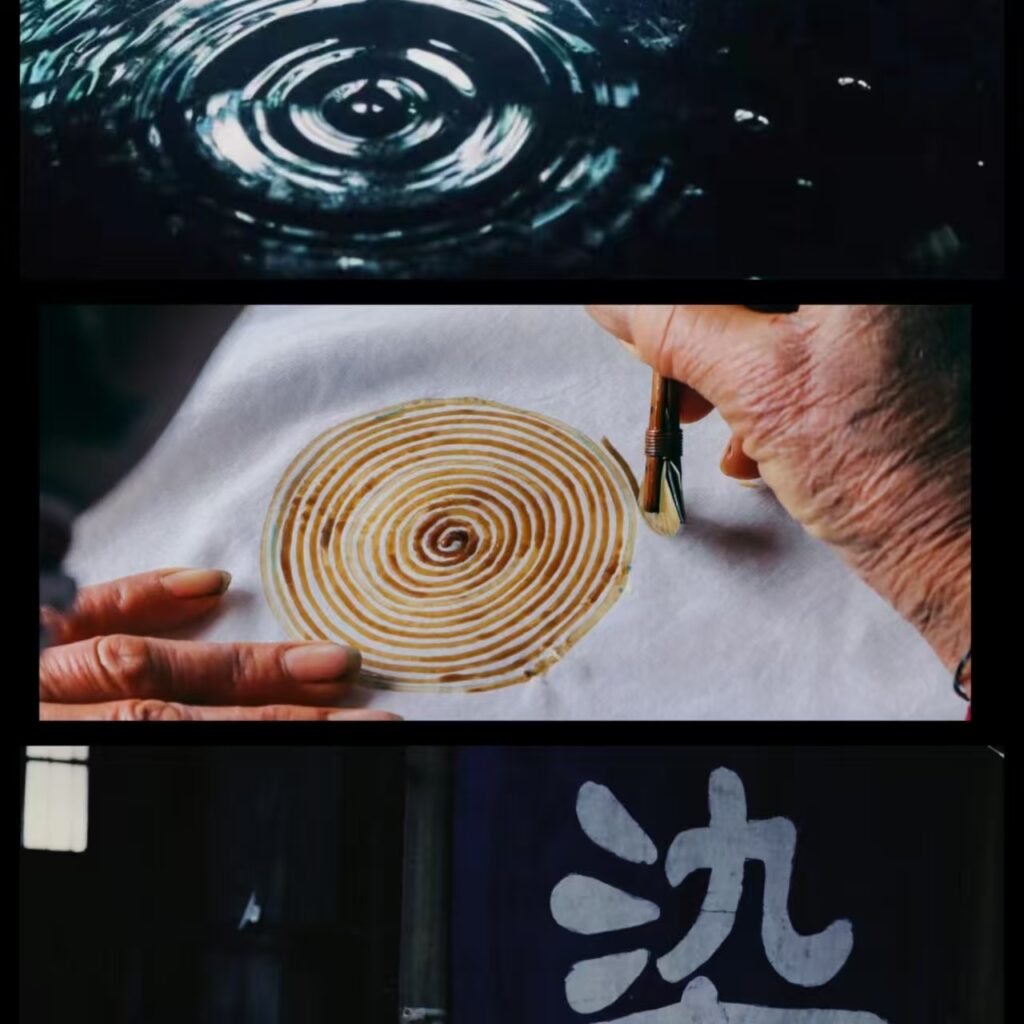
Then comes the wax-resist process itself. In the Miao villages of Qiandongnan, natural beeswax is commonly used, sometimes mixed with a small amount of white wax for flexibility. Collected from mountain beehives, the wax is melted and filtered into a clear liquid. Applying the wax is the most skill-demanding step. Without any preliminary sketches, Miao women hold a copper wax knife, dip it into warm wax, and freely draw on the white cloth.
Wax knives of different widths create different effects: broader blades outline shapes while finer blades draw delicate details. With gentle movements of the wrist, patterns of butterflies, fish, birds, bronze drums, and geometric spirals emerge across the cloth. The wax solidifies quickly upon contact with the fabric, forming a waterproof protective layer.
When skilled artisans apply wax, the lines remain smooth and balanced. During dyeing, the wax layer naturally cracks, creating unique “ice patterns” — textures impossible for machines to replicate. Like the hand-engraved patterns on Miao silver jewelry, these natural cracks are among the most charming surprises of batik.
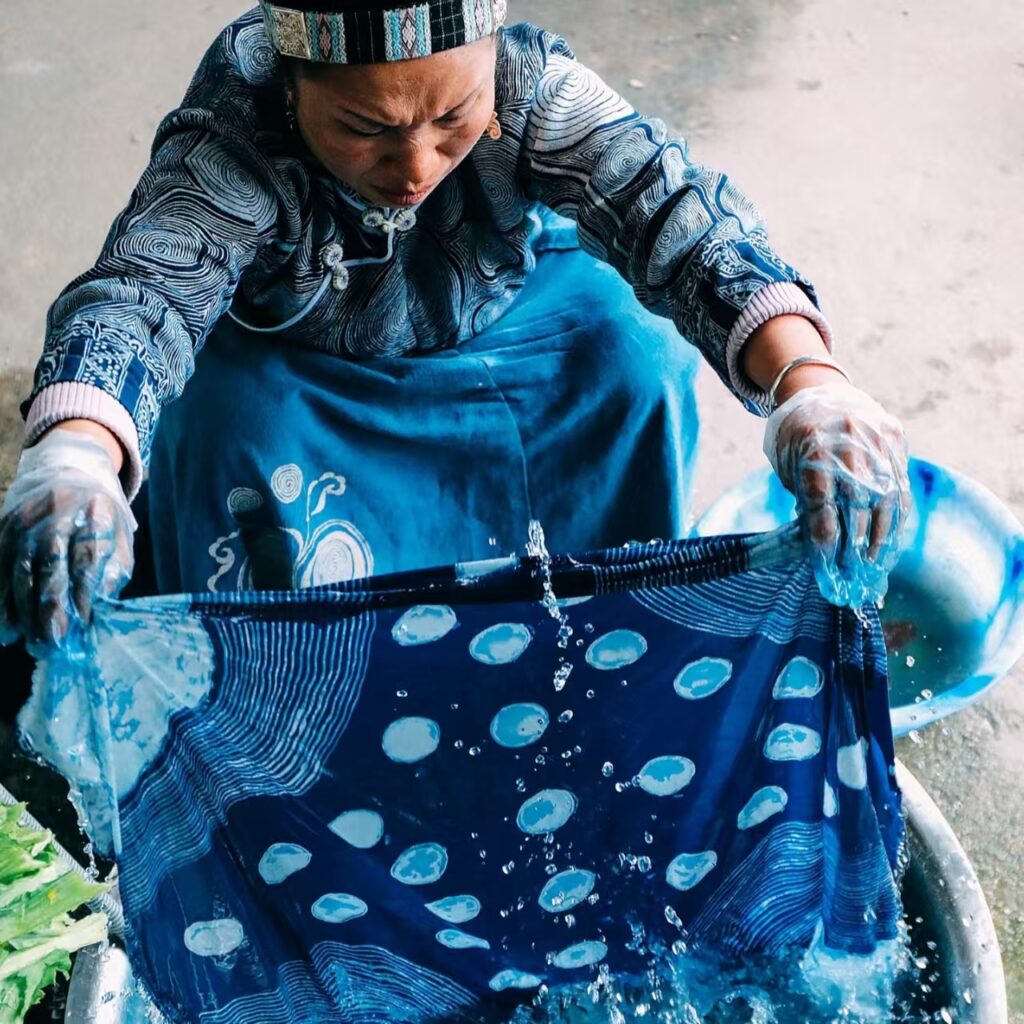
The wax-patterned cloth is then repeatedly dipped into the dye vat. Light blue requires two or three dyeings, while deep indigo may require more than ten. After each dip, the cloth is taken out to dry completely before returning to the vat. Layer upon layer of dye builds a deep, lasting color. The process relies entirely on experience — water temperature, weather conditions, and the vitality of the dye vat all influence the final result. Only skilled artisans can control it precisely, just as crafting Miao silver jewelry requires perfect timing and mastery.
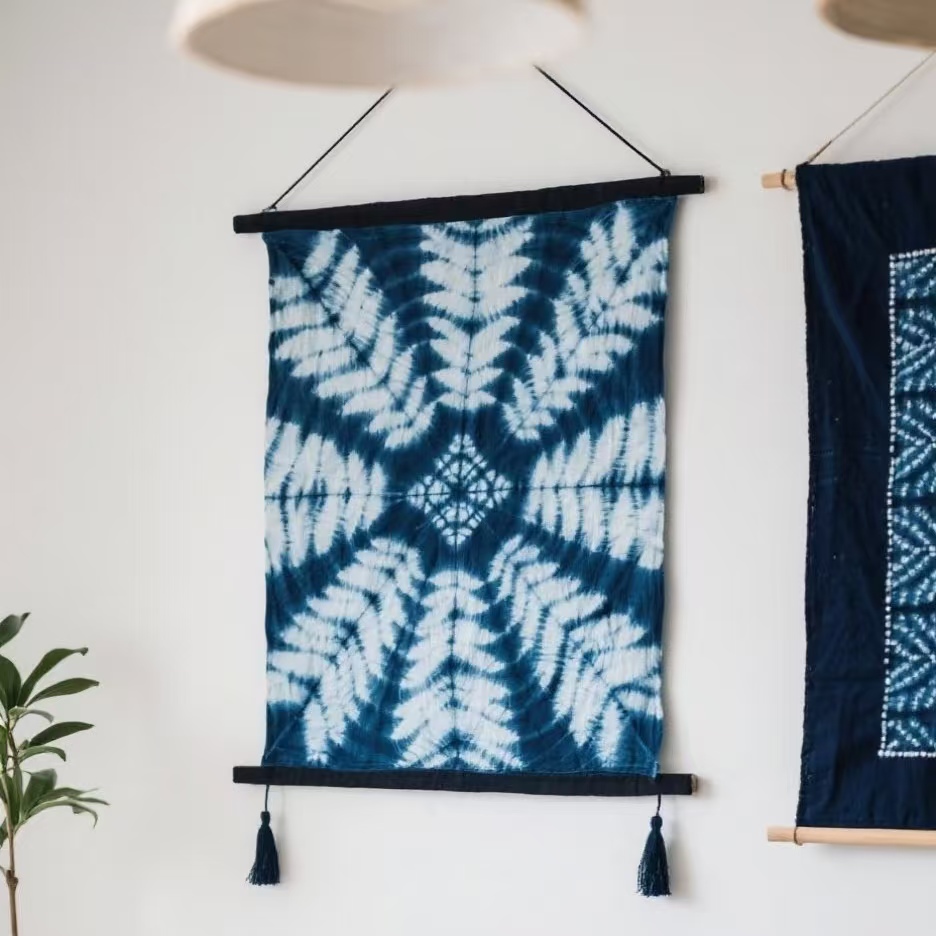
After dyeing, the wax is removed to reveal the patterns. The dyed cloth is placed in boiling water so the wax melts and separates from the fabric. The cloth then reveals clear motifs of white on blue or blue on white. It is washed repeatedly to remove excess dye and residual wax, then dried and pressed. Only then is a piece of batik cloth truly complete.
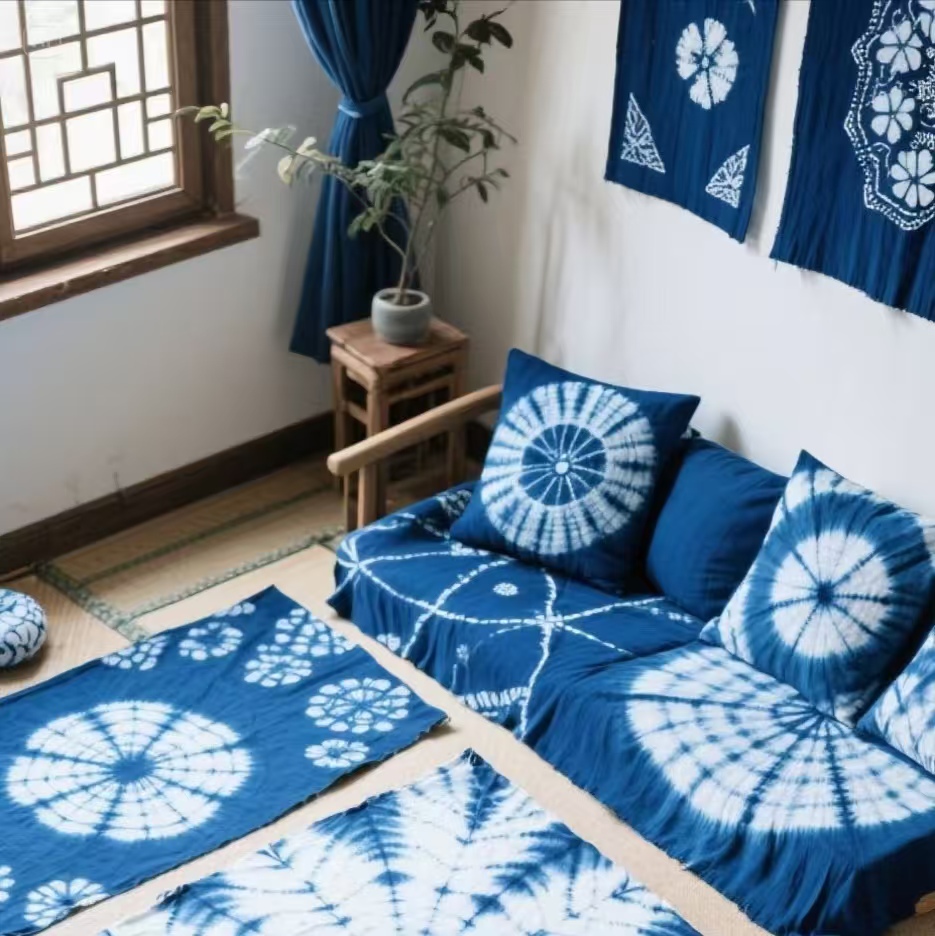
From planting indigo, raising silkworms, and weaving cloth, to preparing dye, applying wax, and dyeing — the entire process involves dozens of steps and can take months or even half a year. Miao women weave their hopes for life and their reverence for nature into each piece of batik cloth. These fabrics become jackets, pleated skirts, headscarves, and baby carriers, worn in daily life and paired with finely crafted Miao silver jewelry.
During festivals, when Miao women gather wearing batik garments adorned with shining silver ornaments, the interplay of blue and white patterns and shimmering silver creates one of the most beautiful sights in Qiandongnan.