
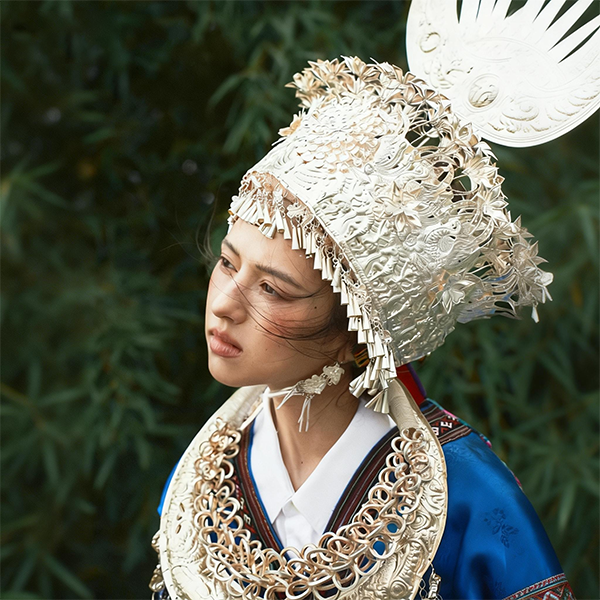
“No silver, no grand attire.”
The ethnic groups along the Pearl River have long revered silver ornaments.Silver jewelry comes in a great variety, adorning people from head to toe, leaving no part unadorned.
Miao silver jewelry, with its diverse varieties,stunning forms, and exquisite craftsmanship,not only presents a magnificent and colorful world of art to people,but also reveals a spiritual world rich in profound meaning.
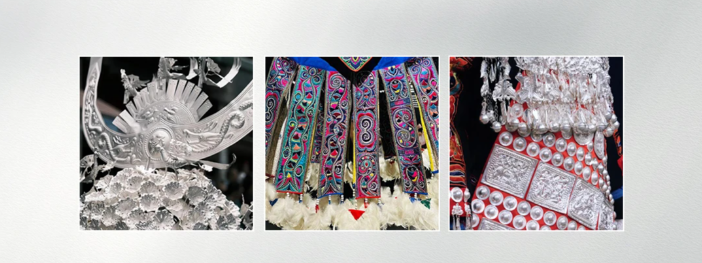
Among the Miao people, silver is far more than ornamentation — it is memory cast in metal, heritage shaped by fire, and history carried upon the body. For a people without a written language in ancient times, silver became a silent chronicle, recording ancestral legends, migration journeys, and spiritual beliefs through intricate craftsmanship.
From birth to marriage and festival celebrations, silver accompanies every important stage of life. Delicately hammered necklaces, layered chest pieces, towering headdresses, and resonant silver bracelets are not merely decorative; they signal identity, age, and social status. The weight of the silver — sometimes reaching several kilograms — reflects not only family wealth but also blessings of protection and prosperity.
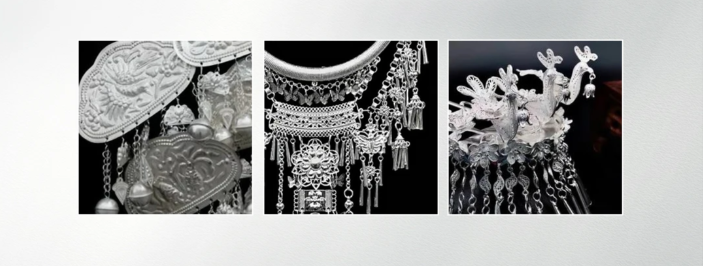
Totemic motifs are the soul of Miao silverwork. Birds symbolize ancestral origins and the memory of migration across mountains and rivers. Ox horns embody strength, courage, and reverence for agrarian life. Dragons, butterflies, flowers, and ancient symbols are meticulously carved, chased, and filigreed by hand, embedding cosmology and folklore into every detail. Each pattern is a fragment of collective memory, passed down through generations of silversmiths.
The making of Miao silver demands extraordinary skill. Casting, hammering, engraving, and filigree work require patience and precision, often involving dozens of steps completed entirely by hand. The rhythmic sound of hammer striking silver echoes through village workshops, continuing a tradition refined over centuries.
Today, Miao silver still shines brightly during festivals and ceremonies. It is dowry, inheritance, and spiritual protection — but above all, it is a living archive. Worn upon the body, it tells stories without words, ensuring that history does not fade, but glimmers on in every movement.