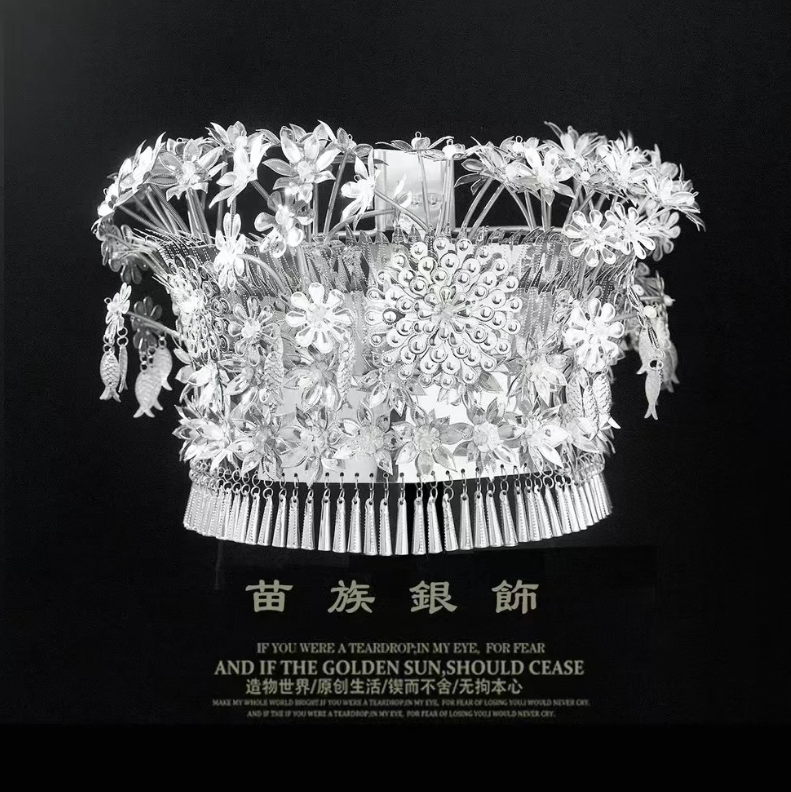
In Qiandongnan Miao and Dong Autonomous Prefecture, Miao silver ornaments are among the most dazzling cultural symbols. The totems on the silver headdresses worn by Miao girls are a concentrated expression of their ethnic spirit.
In Huangping County, the Miao silver crown is topped with a lively flying bird.In Leishan County, the Miao silver crown is marked by a pair of majestic ox horns.
These two strikingly different forms are not merely aesthetic contrasts; they carry a thousand years of historical memory and spiritual inheritance from two distinct branches of the Miao people.
Images sourced from the internet.
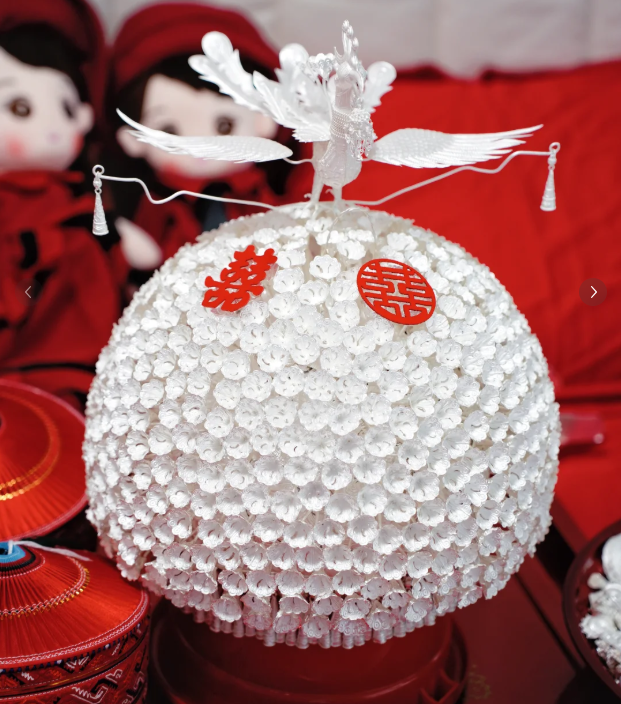
The silver crown of the Huangping Miao represents the ultimate expression of graceful beauty.
At the center of the headdress worn by unmarried girls stands a silver bird poised for flight. It is adorned with hundreds of hand-chased silver flowers, while silver tassels cascade from the edges of the crown, swaying gently in the breeze. As the wearer walks, the tiny silver bells chime softly, evoking the image of a forest spirit.
This silver bird is far more than decoration. It embodies the “Jiyu Bird” from ancient Miao songs. According to legend, the Butterfly Mother laid twelve sacred eggs, which were incubated by the Jiyu Bird, giving birth to the Miao ancestor Jiang Yang and all living beings.
For the Huangping Miao, who have experienced long migrations, the bird symbolizes their ancestors and represents blessings of safe journeys across mountains and rivers. Its slender, flowing form also reflects the agility and resilience embedded in their cultural identity.
Images sourced from the internet.
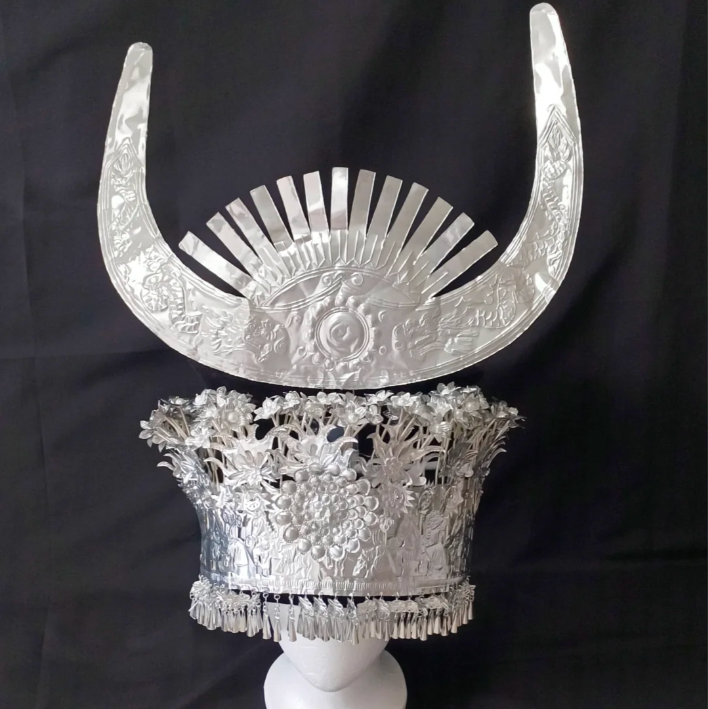
The silver ox horns worn by Leishan Miao girls display a majestic and powerful beauty.
During festivals in Xijiang Qianhu Miao Village, the silver ox horns on the girls’ headdresses can reach 30 to 40 centimeters in height. The curved horns rise upward like water buffalo horns. Between them are inlaid auspicious motifs such as “Two Dragons Playing with a Pearl” and “Dragon and Phoenix Facing the Sun.” Paired with a full set of silver ornaments weighing over ten kilograms, the ensemble creates an imposing presence.
Behind these silver horns lies profound ancestral worship and agricultural belief. The Miao people regard their ancestor Chiyou as the “Ox-Horned God of War,” making the ox horn a symbol of courage and strength. For the Leishan Miao, who have farmed the land for generations, cattle are indispensable partners in production. The traditions of the Ox King Festival further transform the horn into a symbol of gratitude and reverence.
The grandeur and weight of the silver horns require more than ten intricate handcrafted processes — including casting, hammering, and filigree work — demonstrating the exquisite craftsmanship of Miao silversmiths and reflecting a culture deeply rooted in the land.
Although the forms and meanings differ, the cultural core of the Huangping silver bird and the Leishan silver horns is fundamentally the same.
Both are handcrafted in pure silver, embedding totemic beliefs into decorative patterns. They serve as a “silent language” that distinguishes subgroups and signifies identity: the ornaments of unmarried girls are elaborate and ornate, while those of married women are comparatively simple, reflecting Miao social ethics.
The choice of bird and ox-horn totems ultimately mirrors geography and lifestyle. The bird totem of Huangping carries memories of migration; the ox-horn totem of Leishan is rooted in agricultural civilization. Yet both express a shared aspiration for a better life.
Today, these silver crowns and horns still shine brightly during Miao New Year celebrations and festivals. They are dowries, symbols of wealth, and cultural codes passed down from generation to generation.